Buying guide · Updated 2026
Best Portable MIDI Controllers
Five controllers that actually travel, all small enough for a backpack compartment. We compared key feel, control density, connectivity, and whether the pocket-size trade-offs are worth it.
How we picked
- 1. Size and weight, below the point where it stays home
- 2. Control density: pads, knobs, and encoders per square inch
- 3. Connectivity: USB-C, Bluetooth, MIDI and CV for hardware rigs
- 4. Keybed feel relative to the mini class, not to full-size boards
Portable Controllers at a Glance
| Controller | Keys | Pads | Knobs | Faders | DAW Deep | Price |
|---|---|---|---|---|---|---|
Arturia KeyStep 37 Mk2 Best for Travel | 37-key synth | 8 | 8 | — | Class-compliant; shines with hardware synths (sequencer + CV) | $199Full review → |
Novation Launchkey Mini Mk4 | 25-key synth | 16 | 8 | — | Ableton Live, Logic, FL Studio, Cubase | $129Full review → |
Arturia MiniLab 3 | 25-key synth | 8 | 8 | 4 | Ableton Live, Logic, FL Studio, Cubase | $149Full review → |
Akai MPK Mini Mk3 | 25-key synth | 8 | 8 | — | MPC Beats (included), class-compliant | $119Full review → |
Korg nanoKEY Studio | 25-key synth | 8 | 9 | — | Korg Gadget (iOS/OS X), class-compliant elsewhere | $199Full review → |
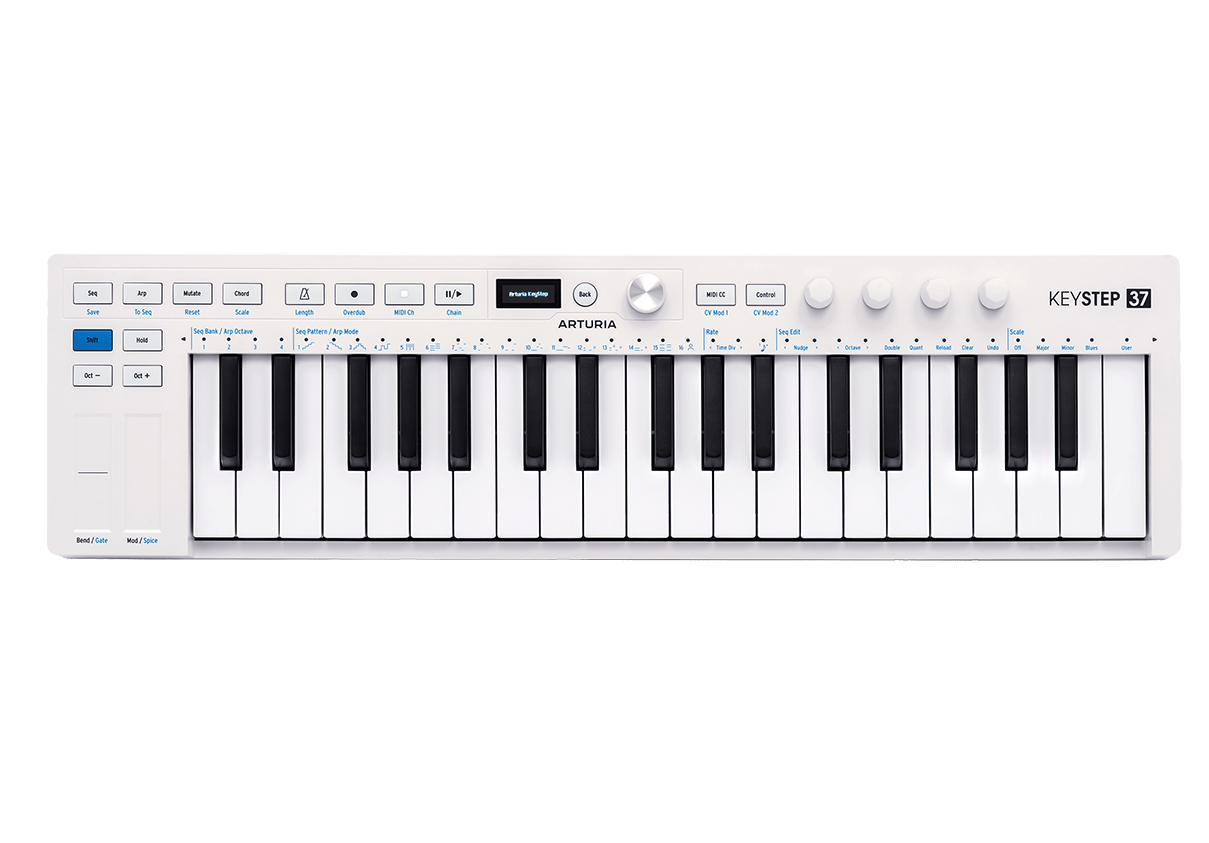
Arturia KeyStep 37 Mk2
Thirty-seven velocity keys, eight knobs, and a 64-step sequencer in a body shorter than a laptop. A classic that keeps its value.
- ✓64-step polyphonic sequencer on the unit itself
- ✓CV/Gate out drives everything from tiny synths to modular
- ✓USB powered and portable
- -Keys are mini-ish; fine for chords, less for piano
- -No battery; needs USB or a phone charger
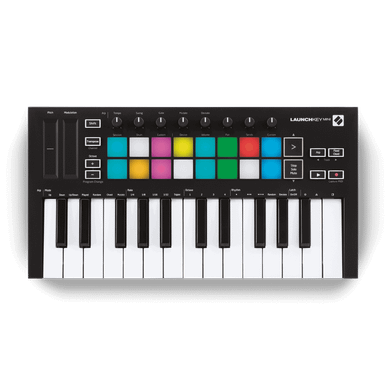
Novation Launchkey Mini Mk4
Twenty-five keys, sixteen pads, and eight knobs in a backpack-sized body. Mk4's keybed is a clear step up from the Mk3.
- ✓16 pads in a mini, so clip launch stays intact
- ✓Hold-chord and fixed-chord modes for melody writing
- ✓Ableton Live Lite included
- -25 mini keys get cramped for two-hand playing
- -No MIDI 5-pin or CV outs
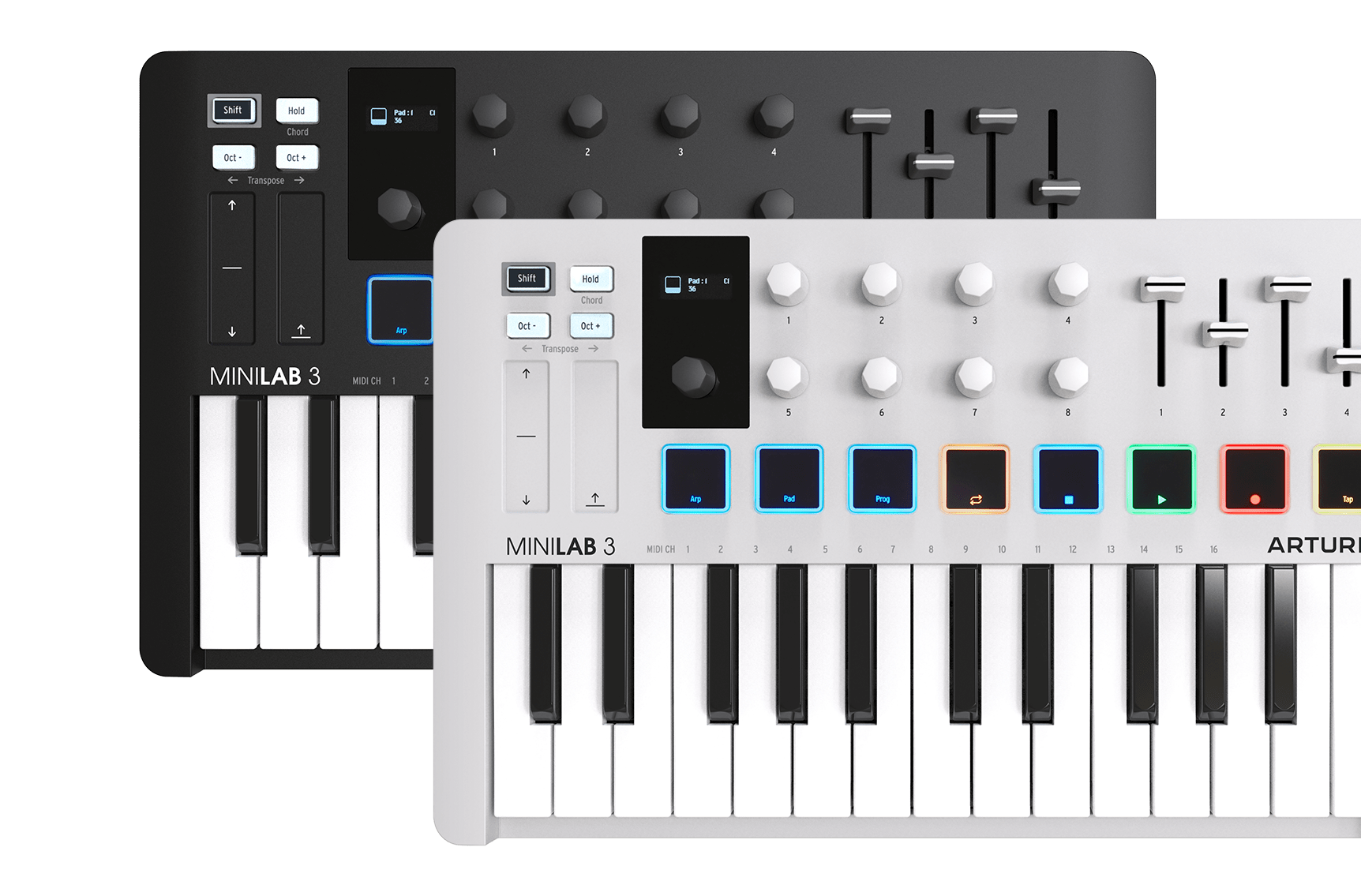
Arturia MiniLab 3
MiniLab 3 fixed its predecessor's mushy keys, added transport controls, and kept the faders and pads. The premium-feeling mini at $149.
- ✓Keybed punches above mini-class; the best 25-key feel
- ✓8 pads, 8 knobs, and 4 faders, rare density at this size
- ✓Analog Lab Intro with thousands of preset sounds
- -No 5-pin MIDI or CV out
- -Pitch/mod are touch strips, not wheels
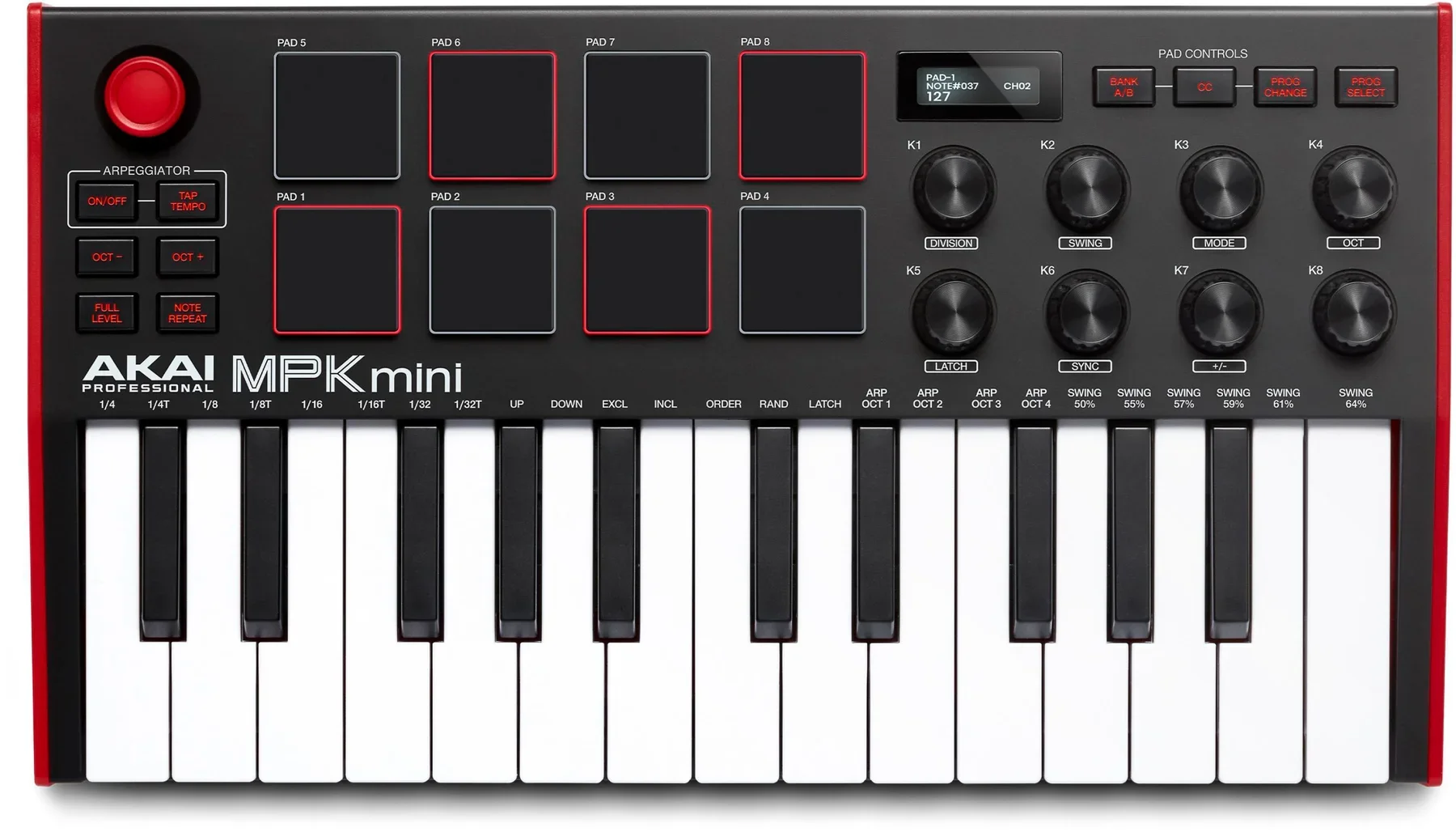
Akai MPK Mini Mk3
The best-selling mini controller: eight pads, eight knobs, an OLED screen, and a pitch/mod thumbstick, all under $120.
- ✓Great value: pads, knobs, screen, arpeggiator
- ✓Tiny and tough enough to live in a bag
- ✓MPC Beats + soft-synth bundle included
- -The 25 mini keys are the weak point
- -Thumbstick pitch bend isn't everyone's favorite
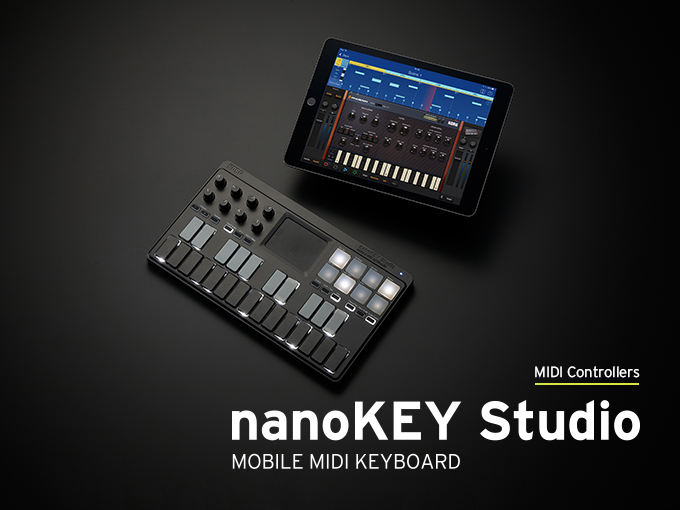
Korg nanoKEY Studio
The only wireless contender here: Bluetooth MIDI and battery power, no dongles or cables. Built for phones and tablets.
- ✓Bluetooth MIDI; first-class iPad/phone companion
- ✓Battery powered (2×AA)
- ✓Full controller surface in a snack-size frame
- -Keys are the smallest, flattest of the mini class
- -No feedback display on the knobs; blind tweaking
- -Feels like a toy next to metal-chassis rivals
What "portable" really buys you
A portable controller is a trade of key size and action for footprint. The KeyStep 37 is the serious musician's choice: full playability, eight knobs, and a built-in sequencer that keeps working even without a computer. The mini keyboards (MiniLab 3, Launchkey Mini, MPK Mini) trade keys for pads and knobs, and the MiniLab 3 has the best keybed of that group. The nanoKEY Studio is the specialist: wireless, battery-powered, and built for phones and tablets.
One rule worth repeating: if the controller will live on a desk 90% of the time, buy a full-size 49-key board instead and skip this category entirely. Portable controllers are for people who actually move the music around.
Frequently Asked Questions
Is battery power necessary in a portable controller?
Only if you work from a phone or tablet, or if you often jam somewhere without a wall socket. USB bus power from a laptop is effectively portable already. The one true wireless option in this group is the Korg nanoKEY Studio, which runs on AA batteries and connects via Bluetooth, so it is the pick for iPad-first setups.
Are 25 keys enough for a travel controller?
For chords, melodies, and sketching, yes. Twenty-five keys cover a melody range plus a bass note, which is what most laptop producers actually use on the go. If you want two-handed piano parts you need a 37- or 49-key board, and at that point portability starts to lose meaning.
Do mini controllers work with iPads and phones?
With the right cable or Bluetooth, yes. Class-compliant USB controllers work with iPads through a USB-C adapter, and the nanoKEY Studio connects directly over Bluetooth. iOS apps like GarageBand, Korg Gadget, and AUM treat MIDI controllers as first-class citizens.
Mini keys or full-size keys?
Mini keys are narrower, which is great for fitting in a bag and playing chord stabs, but they train your hands wrong for piano. If you take keyboard playing seriously, buy a 49-key full-size board that stays on the desk, and treat portability as a bonus rather than the mission.
The bottom line
The Arturia KeyStep 37 is the best portable controller you can buy: it costs the same as the minis and does more. Travel-light producers who want max control density should get the MiniLab 3, and iPad-first creators should get the nanoKEY Studio.